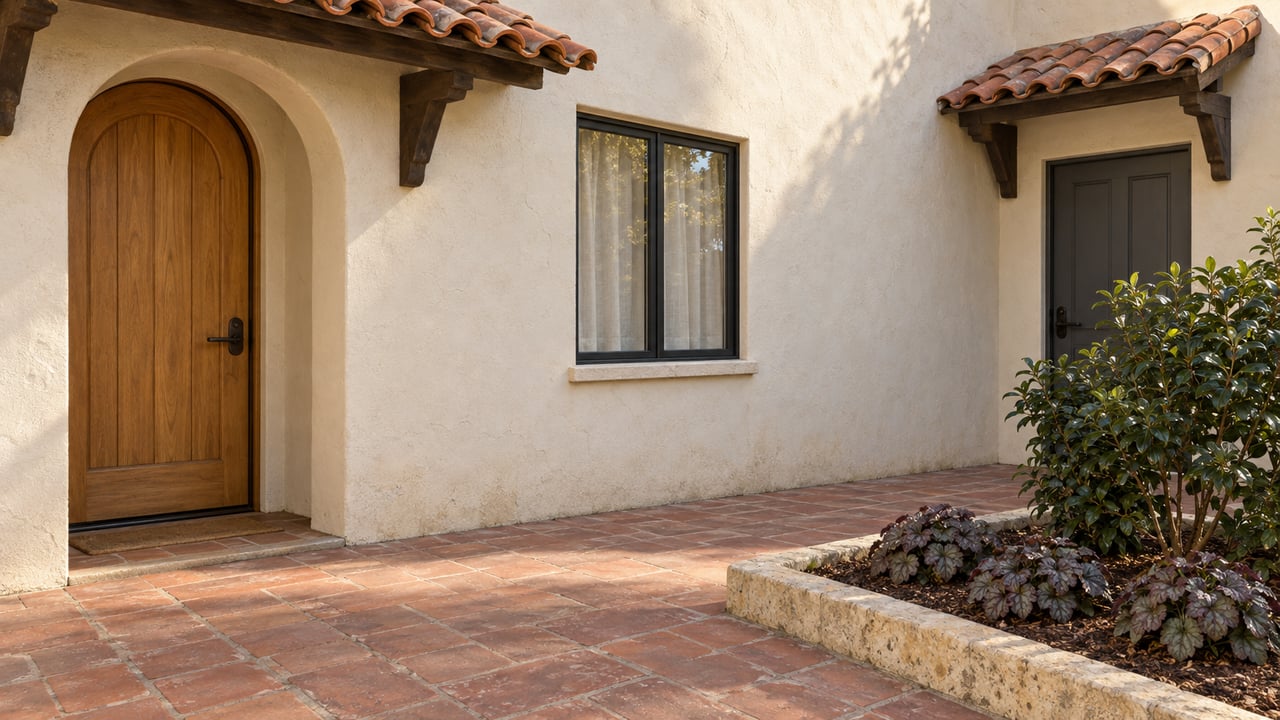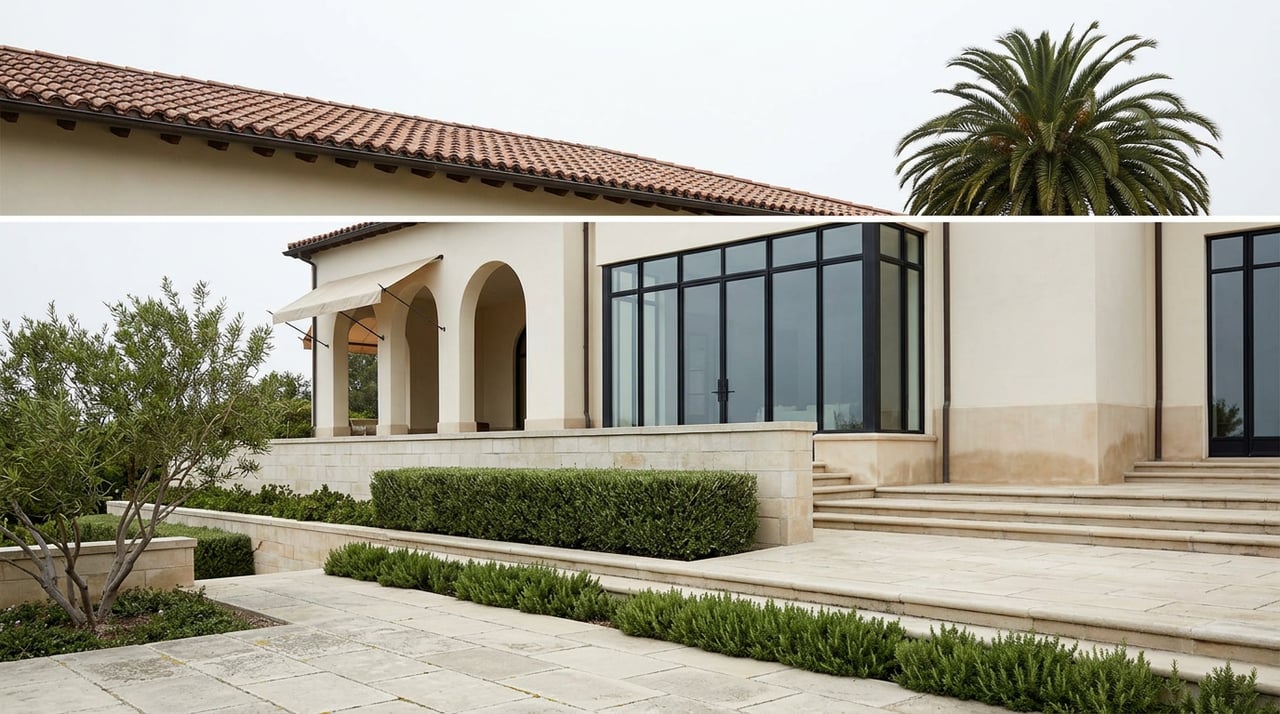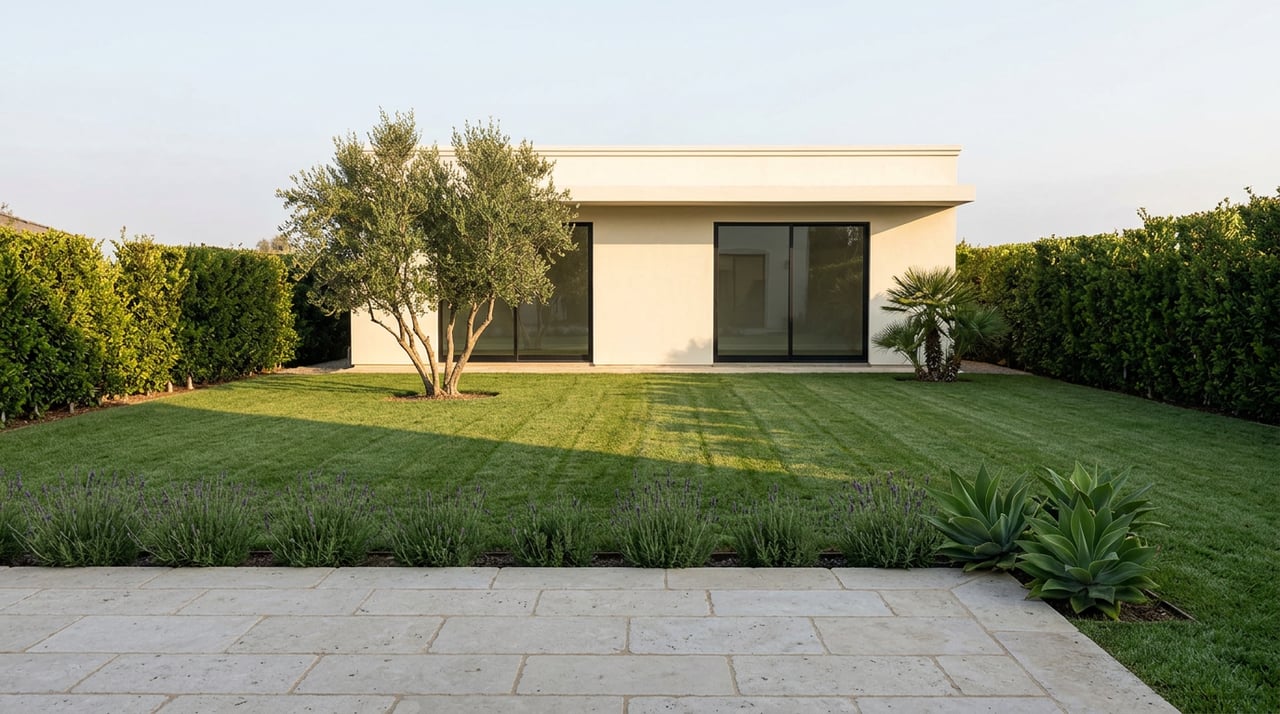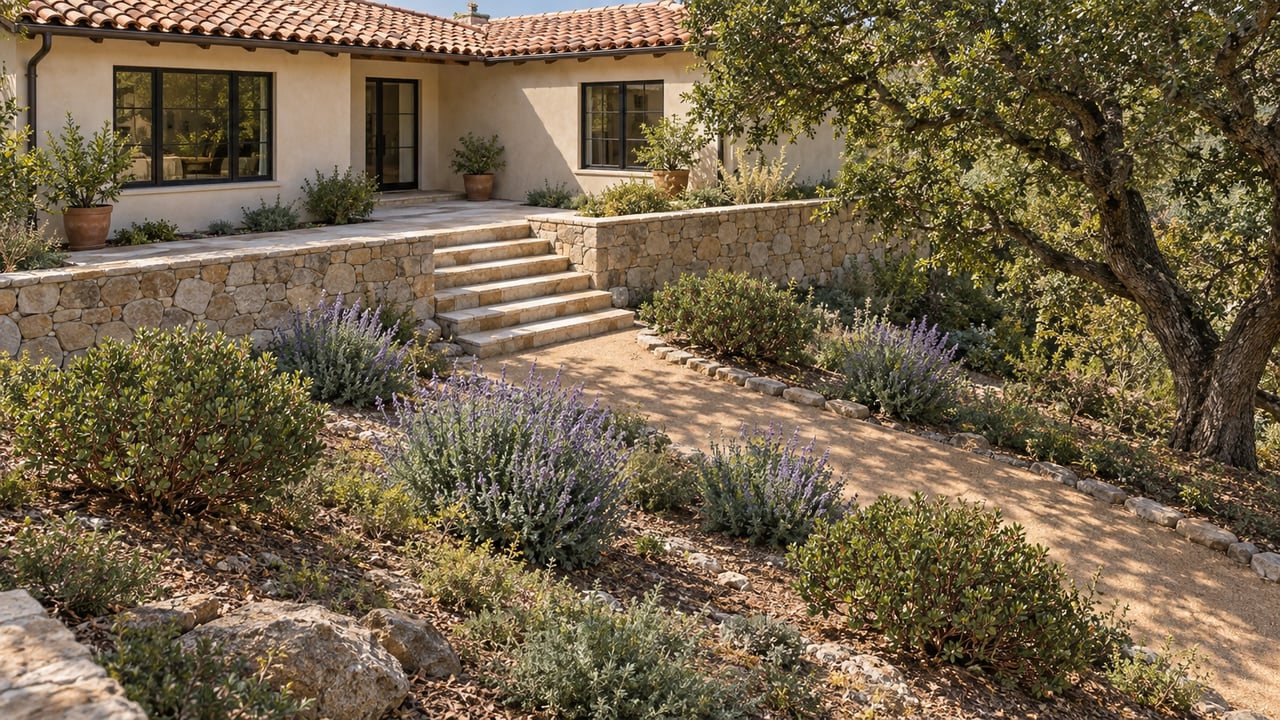
Two listings sit side by side on a laptop screen. Same city, same rough price point, same lot size printed in bold under the photos. One buyer assumes they're interchangeable and starts comparing kitchens. They aren't interchangeable, and the kitchens were never the variable that mattered. The number that actually separates these two properties doesn't appear on the listing at all. It lives in a city planning document called the Slope Factor Guideline, and it can shrink the square footage a buyer is legally allowed to build on by ten percent or more before a single wall goes up.
This matters more in La Cañada Flintridge than almost anywhere else in the foothills, because the city has almost no flat, undeveloped land left to sell. What's on the market now is a mix of level in-town parcels and sloped hillside lots that look similar on paper and behave very differently once a builder gets involved.
The Slope Factor Nobody Puts in the Listing
The city's zoning code triggers a City Hillside Development Permit on any residential lot with an average slope of 15 percent or greater. That single line, tucked into Chapter 11.35 of the municipal code, is the reason a hillside parcel's advertised square footage and its buildable square footage can be two different numbers.
Here's how the math actually works in practice. In one hillside approval processed by the city's planning department, a property's potential maximum buildable floor area ratio came out to 5,801 square feet based on lot size alone. Because the parcel qualified as hillside terrain, the city applied its Slope Factor Guideline and cut that figure by a factor of 0.90, bringing the real ceiling down to 5,221 square feet. That's a 580 square foot gap between what the raw lot size implied and what the city would actually permit, and it happened before anyone touched setbacks, height limits, or tree protections.
Multiply that kind of reduction across a hillside neighborhood full of half-acre and acre lots, and the pattern becomes clear: the more dramatic the view, the more likely the slope factor is quietly discounting the buildable envelope. A flat 12,000 square foot lot in town and a sloped 15,000 square foot lot in the hills are not the same purchase, even though the second number is bigger.
Two Communities Wearing One Name
The slope math isn't the only thing hiding inside a single city name. La Cañada Flintridge is, and has always been, two communities that grew up next to each other and eventually merged into one municipal boundary. La Cañada was settled in the 1870s by homesteaders drawn to the valley, and one of its founding families, the Lantermans, arrived in 1875. Their home still stands today as the Lanterman House Museum. Flintridge came later, built out as a master-planned development generally south of Foothill Boulevard, and it's still home to institutions like the Flintridge Riding Club and Flintridge Preparatory School. The city's full name deliberately skips the hyphen you'd expect between two place names, a small piece of civic design meant to signal that these were one place now, not two.
Longtime residents still use the older names casually, and the distinction isn't just nostalgia. Flintridge addresses, generally south of Foothill, tend to command the strongest premiums in the city, reflecting the larger, more private lots the master-planned section was built around from the start. A buyer cross-shopping listings by school boundary or by price per square foot alone can miss this entirely, because MLS data doesn't tag a home as "La Cañada side" or "Flintridge side." The dividing line is Foothill Boulevard, and it's informal, but it shows up in what buyers are willing to pay.
What Actually Moves the Price, Beyond Square Footage
Once you account for slope and side of the boulevard, a third variable does more work than most buyers expect: architectural pedigree, and whether the land underneath the house is flat enough to use.
A 15,000 square foot lot that's mostly flat and usable can sell for 30 to 40 percent more than a 20,000 square foot lot where most of the land is unbuildable hillside, because families weighing pools, play space, and outdoor entertaining are pricing usable footprint, not raw acreage. Estate lots exceeding an acre in flatter pockets like Meadow Grove can command per-square-foot values double what a standard lot fetches nearby.
Architectural pedigree layers on top of that. A smaller architect-designed Craftsman with documented provenance can outsell a larger, generically built Mediterranean on the same street, even after accounting for condition. The pattern shows up clearly when you run the numbers on comparable homes: a Paul Revere Williams-designed Craftsman on a 12,000 square foot lot, walkable to La Cañada Elementary but needing kitchen and bath updates, still lands ahead of a same-sized generic home in original condition, because the architectural signature and school-adjacent location outweigh the deferred maintenance.
| What's driving the price | Typical swing |
|---|---|
| Flintridge side vs. La Cañada side of Foothill Blvd | Highest premiums cluster south of Foothill |
| Lot over 15,000 sq ft, mostly flat and usable | 10 to 20% above a standard 8,000 to 10,000 sq ft lot |
| Lot over 20,000 sq ft, usable | 20 to 30% above smaller-lot comparables |
| Acre-plus flat estate lot (Meadow Grove and similar pockets) | Can double per-square-foot value vs. standard lots |
| Documented architectural pedigree (Craftsman, Mid-Century, Spanish Colonial) | Can add $300K to $600K independent of size |
| Hillside slope factor reduction on buildable FAR | Often 10% or more off the raw lot-size number |
None of these numbers show up in a standard search filter. They only surface when someone runs the comparison by hand, which is exactly why two "identical" 2,500 square foot listings can close $500,000 apart.
The Gap Between What's Listed and What Closes
There's a second mismatch worth flagging for anyone reading the headline price and assuming it's the market. As of early September 2026, the citywide median list price in La Cañada Flintridge was running close to $2.9 million. But the homes that actually closed over the preceding months told a different story, with sold-price medians closer to $2.2 million to $2.5 million and price-per-square-foot figures down double digits year over year in some trailing three-month windows, even as broader home-value estimates for the area showed a modest increase over the same twelve months.
That's not a contradiction so much as two different measurements answering two different questions. A sold-price median reflects whatever mix of homes actually changed hands in a given window. If fewer of the very largest estates traded in a particular quarter, the median can drop even while most individual homes are holding or gaining value. For a buyer, the practical read is that list prices in this market carry real cushion right now, and the gap between what's asked and what closes is wider than the headline number suggests. That's useful leverage in a negotiation, and it's the kind of detail that only shows up when you compare list data against closed transactions side by side rather than trusting either one alone.
The Trees and Walls You Inherit With the Lot
Buyers planning a pool, an addition, or a rebuild on a hillside lot inherit more than a slope factor. The city's tree ordinance requires that pool construction be set back from the outer trunk circumference of any tree, on or off the subject property, by 3.5 times the trunk's diameter measured 54 inches above grade, and that setback applies regardless of species once a tree is protected. Retaining walls over three feet on hillside lots also have to be screened by landscaping or structure rather than left exposed. None of this is disqualifying, but it's the kind of detail that changes a pool contractor's quote once they've walked the site, and it's worth pricing into an offer before writing it, not after.
If You're Comparing La Cañada Flintridge to San Marino or South Pasadena
Buyers cross-shopping the foothill cities often assume the comparison is a straight one: similar schools, similar affluence, pick based on commute. San Marino offers a similar profile of strong schools and large homes on flatter topography with more historic architecture throughout. South Pasadena trades some of that lot size for a more walkable, historic downtown. La Cañada Flintridge's version of the trade is topography itself: more dramatic views and larger nominal lots, but a meaningful share of that land discounted by the slope factor before it ever becomes house.
None of that makes one city better than another. It makes the comparison incomplete if it stops at price per square foot, because the square footage itself isn't measuring the same thing from one hillside lot to the next.
If you're weighing a specific La Cañada Flintridge property against what it can actually support, or trying to figure out what your own lot's slope factor does to its buildable envelope before you list it, that's a conversation worth having before an offer goes in, not after. The Hairabedian Group can run that comparison against the actual parcel, not just the listing sheet.
FAQ
Does the Slope Factor Guideline apply to every lot in La Cañada Flintridge? No. It applies specifically to lots that meet the city's hillside definition, an average slope of 15 percent or greater under Chapter 11.35 of the zoning code. Flat, in-town parcels aren't subject to the reduction.
Can I still build an ADU on a hillside lot here? Yes, but height limits are tighter than on flat parcels. Detached ADUs are generally limited to one story at 16 to 18 feet, and the city may require a soils report if the unit sits on a slope or an area with significant grading.
Do protected trees rule out a pool on an estate lot? Not usually, but the setback math has to be run before design starts. Pool construction has to clear 3.5 times a protected tree's trunk diameter, measured 54 inches above grade, and that rule applies to trees on neighboring lots as well as your own.